
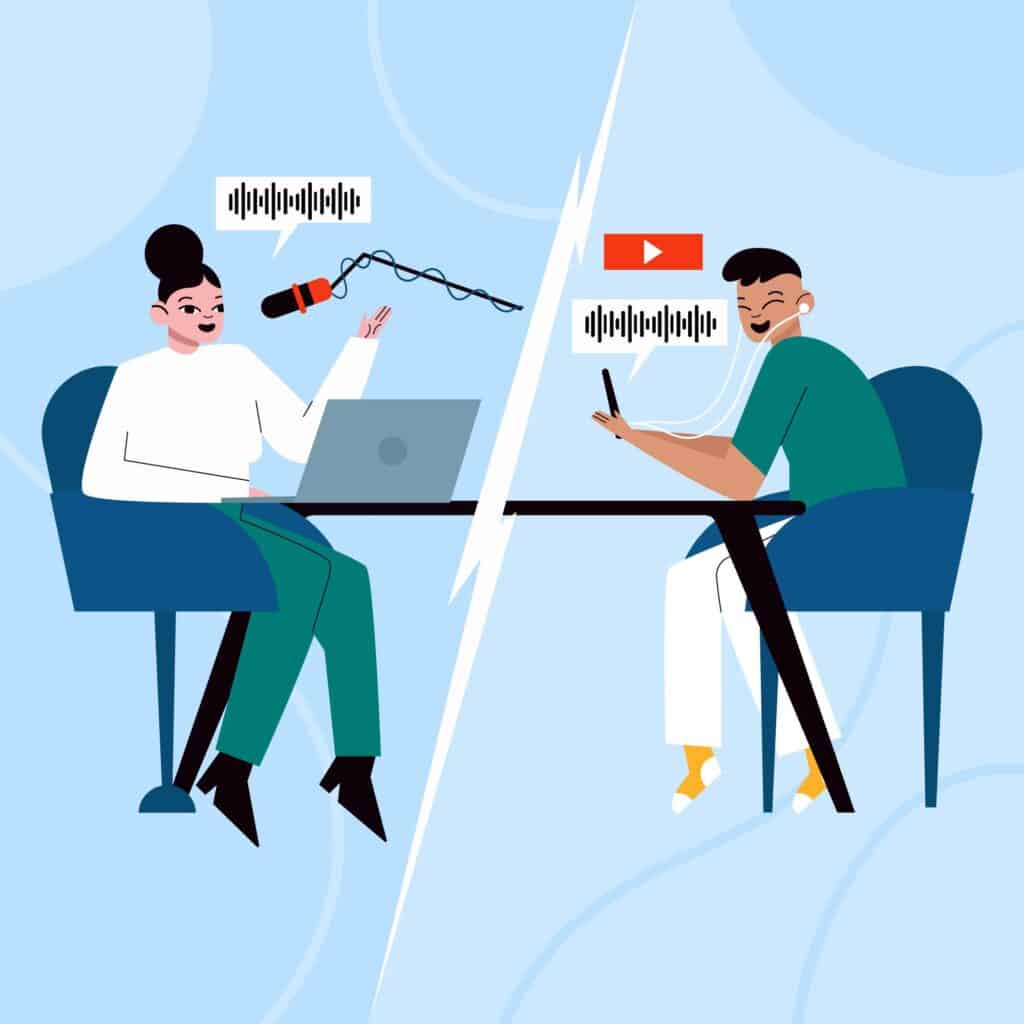
If you’re publishing your podcast on YouTube as well as audio platforms, aligning your SEO strategy across both can significantly increase your visibility and listener conversions. YouTube is one of the largest search engines in the world, and podcast apps also rely on keyword data to surface relevant content. When your metadata is consistent and intentional, you boost your chances of being discovered twice.
Use Consistent, Keyword-Rich Titles
Start with your episode title. Use the same clear, descriptive title across both podcast platforms and YouTube. Make sure it includes the primary keyword or topic your audience is likely to search for. Avoid vague titles like “Episode 10: Special Guest” and instead try something like “How to Grow a Remote Team with Sarah Lin.”
If your guest is well-known or the topic is highly searchable, lead with that term to increase visibility.
Write Descriptions That Serve Both Platforms
Your episode description should work for podcast apps and YouTube viewers alike. In the first two lines, summarize what the episode is about using natural language that includes relevant keywords. Follow up with timestamps, key takeaways, guest bios, and links.
On YouTube, take advantage of the “Show More” section to include affiliate links, social media profiles, or related episodes. For podcast platforms, make sure the summary is short enough to appear well on mobile while still informative.
Match Tags and Categories Where Possible
Use relevant tags on YouTube to help the algorithm categorize your content. While most podcast directories don’t use tags in the same way, the categories you choose on your podcast host should mirror your YouTube metadata. This alignment strengthens your overall content signals across platforms.
You can also use tools like TubeBuddy or Keywords Everywhere to identify terms your audience is actively searching for.
Add Chapters and Timestamps
Chapters help both user experience and SEO. On YouTube, timestamps create clickable sections that improve engagement and watch time. These markers also give YouTube more context about what your video covers.
Use the same structure to break down your podcast show notes. Even if podcast platforms don’t render chapters as cleanly, these timestamps help with scanning and reinforce consistency in your content formatting.
Final Thoughts
Syncing your podcast and YouTube SEO strategies isn’t just about being organized, it’s about amplifying discoverability and helping your content work harder. With aligned titles, optimized descriptions, shared tags, and consistent formatting, you increase your visibility across search engines while making it easier for new audiences to find and follow your show.
Looking to take your podcast to the next level? Book a session at Modern Stoa Podcast Studio. Go to modernstoa.co/studio.